


















Greenhouse Gardening: Extend Your Growing Season Like a Pro

For many gardeners, the growing season never seems long enough. Just as spring planting begins to take off, summer flies by, and before long, cooler temperatures bring the season to an end.
A greenhouse changes that.
Whether you’re starting seedlings weeks before your last frost, protecting delicate plants from unpredictable weather, or growing fresh vegetables later into the fall, a greenhouse gives you greater control over your garden and opens the door to a longer, more productive growing season.
If you’ve been thinking about adding a greenhouse to your backyard, this guide will help you understand the benefits, choose the right type, and make the most of your investment.
Table of Contents
- Why Own a Greenhouse?
- Choosing the Right Greenhouse
- What Can You Grow?
- Setting Up Your Greenhouse
- Caring for Your Plants
- 💡 EverPlay Tips
- 🎨 Garden Design Ideas
- 🛒 Before You Buy
- ⭐ EverPlay Recommendation
- Common Mistakes to Avoid
- Frequently Asked Questions
- Final Thoughts
Why Own a Greenhouse?
A greenhouse creates a controlled growing environment that protects plants from changing weather conditions while allowing you to garden for much longer than a traditional outdoor garden.
Benefits include:
- Extend the growing season
- Start seedlings earlier in spring
- Protect plants from frost
- Shield crops from heavy rain and wind
- Grow more delicate vegetables and flowers
- Improve plant growth through consistent temperatures
For many homeowners, a greenhouse quickly becomes the centerpiece of the backyard garden.
Choosing the Right Greenhouse
Greenhouses are available in a variety of sizes and styles, making it easy to find one that fits your available space and gardening goals.
Compact Greenhouses
Perfect for:
- Small backyards
- Patios
- Beginners
- Herb gardens
- Seed starting
Compact models provide enough room for trays of seedlings and smaller potted plants without taking up much space.
Walk-In Greenhouses
A walk-in greenhouse offers significantly more flexibility.
These larger structures allow room for shelving, worktables, watering equipment, and taller plants while providing comfortable space to move around.
They’re ideal for gardeners planning to grow vegetables throughout multiple seasons.
Polycarbonate vs. Glass
Most modern backyard greenhouses use polycarbonate panels because they’re lightweight, durable, and provide excellent insulation while diffusing sunlight evenly.
Glass greenhouses offer exceptional clarity and timeless beauty but generally require more maintenance and are more susceptible to damage.
💡 EverPlay Tip
Choose the largest greenhouse your space and budget comfortably allow. Most gardeners quickly discover they wish they had a little more growing room after their first season.
What Can You Grow?
One of the greatest advantages of greenhouse gardening is versatility.
Popular choices include:
Vegetables
- Tomatoes
- Peppers
- Cucumbers
- Lettuce
- Spinach
- Kale
Herbs
- Basil
- Rosemary
- Cilantro
- Parsley
- Dill
- Oregano
Flowers
- Petunias
- Geraniums
- Marigolds
- Orchids
- Lavender
Seedlings
Many gardeners use greenhouses primarily to start young plants before transplanting them outdoors once warmer weather arrives.
🎨 Garden Design Ideas
Backyard Garden Center
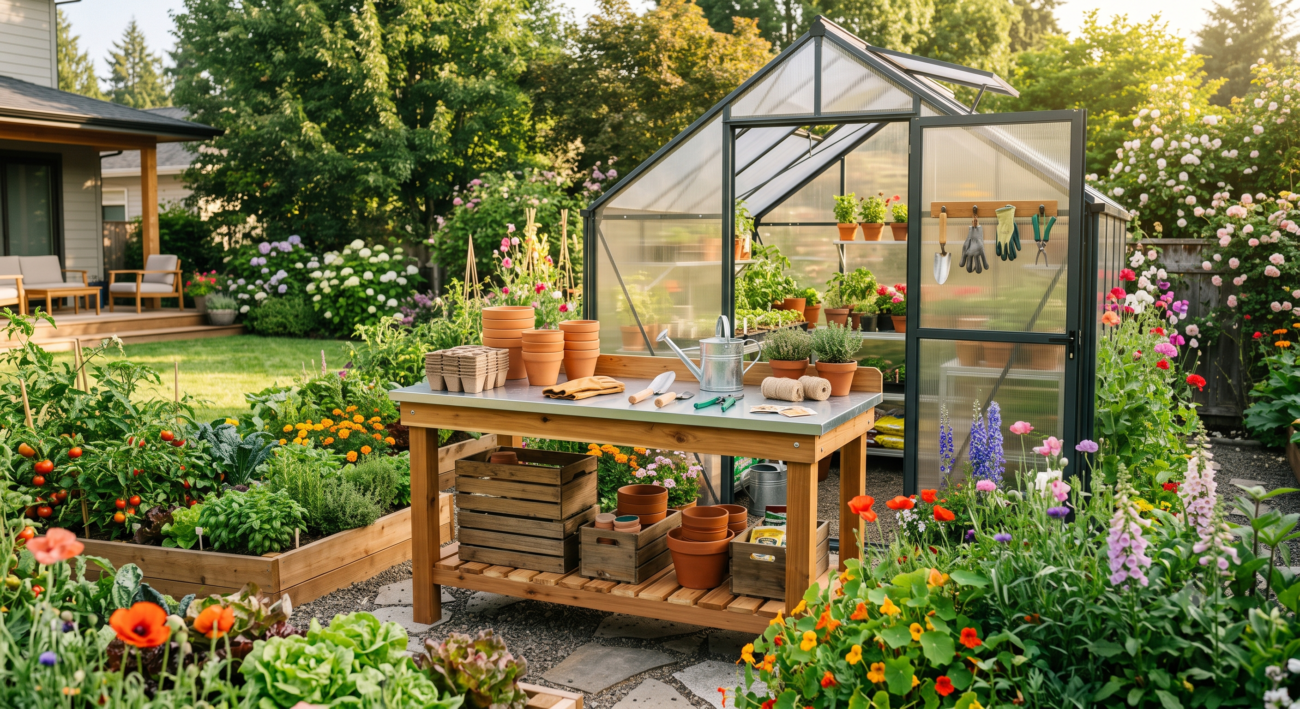
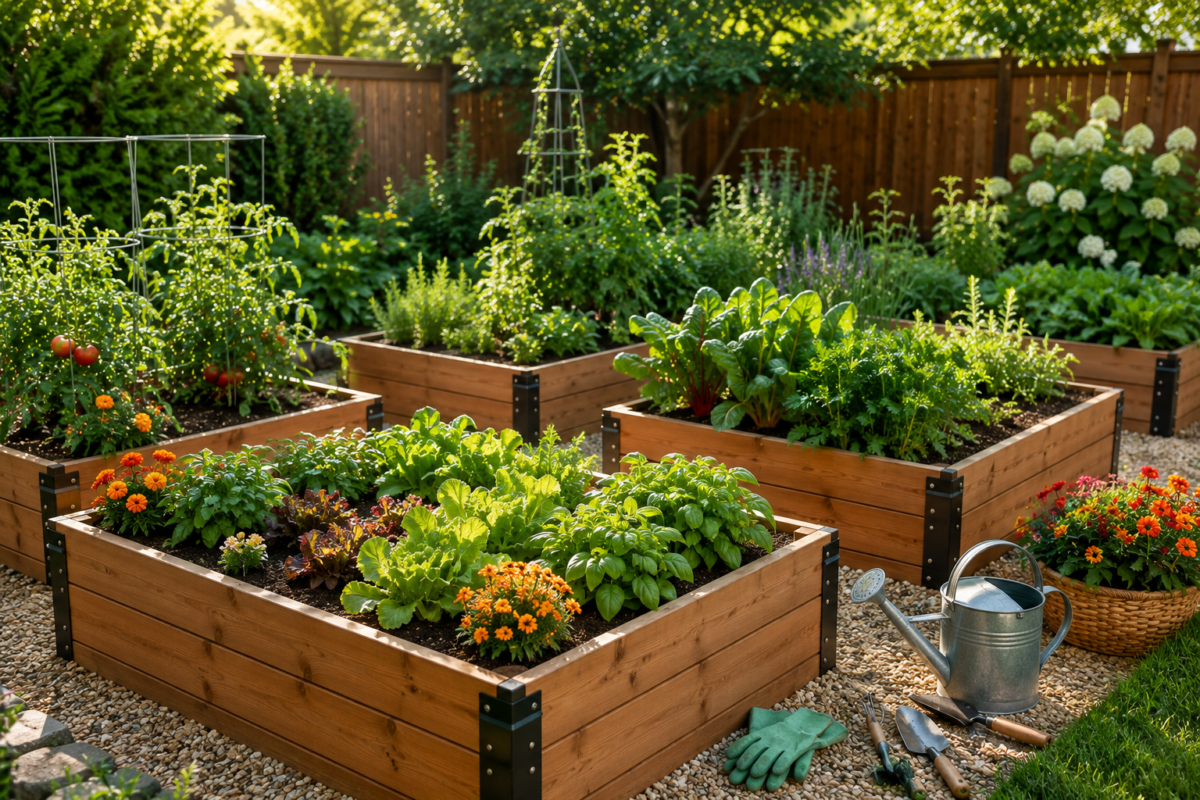
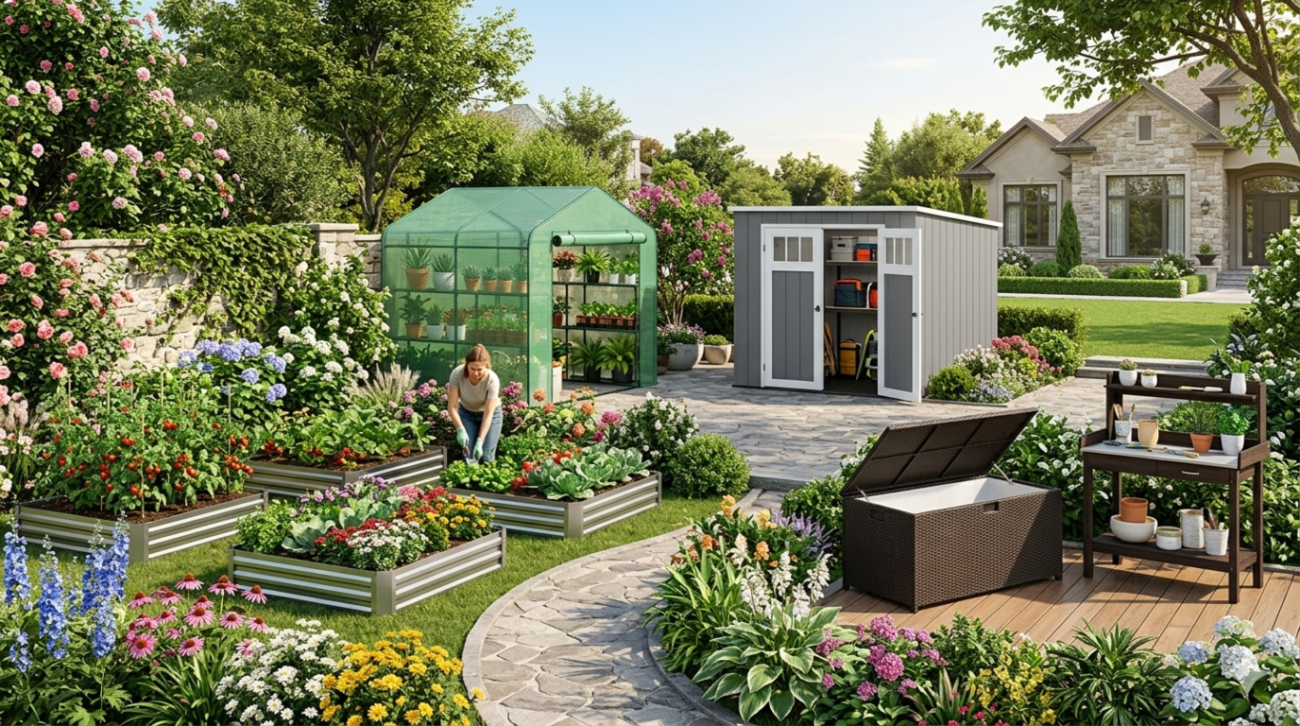
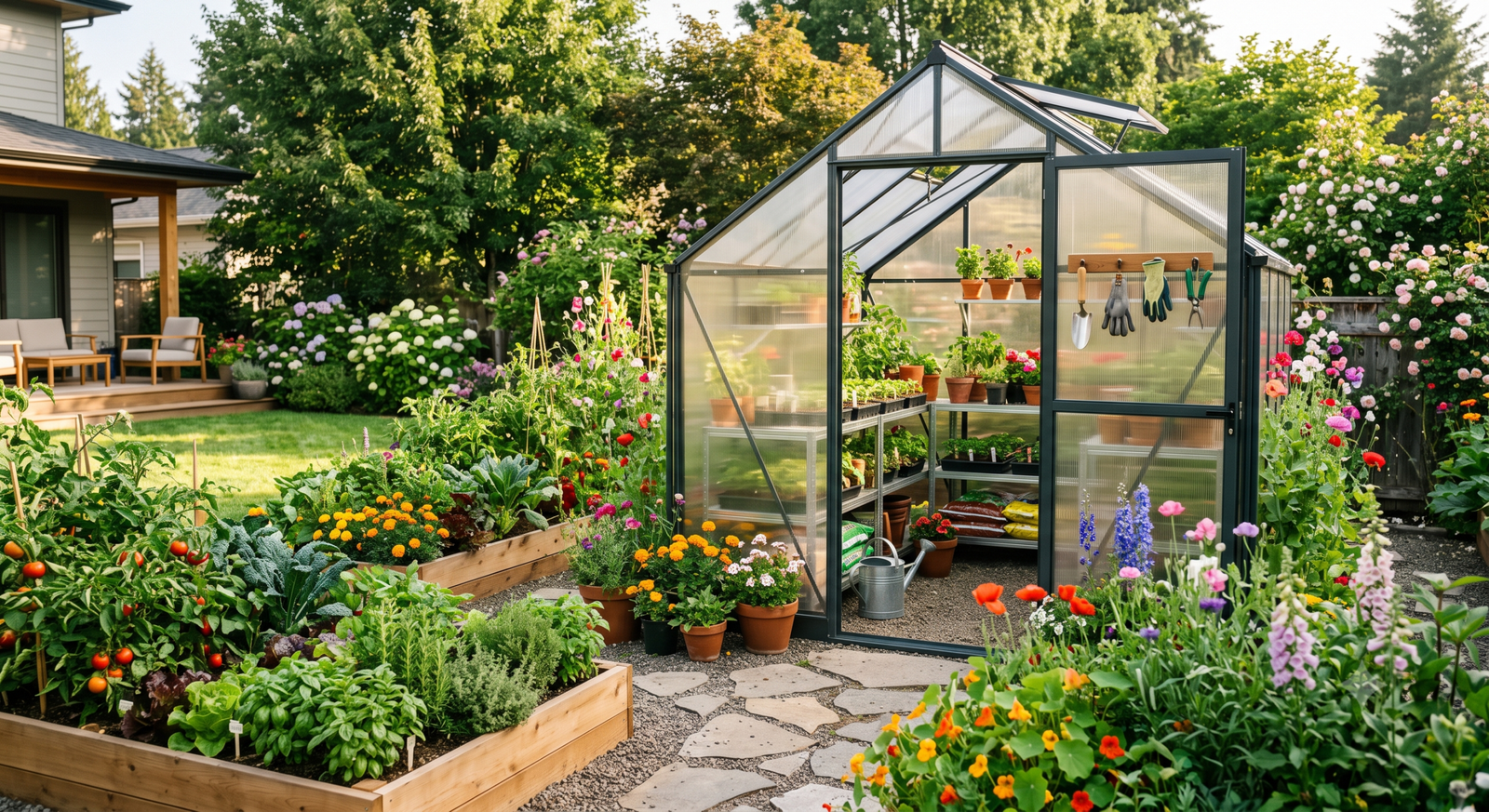
Position your greenhouse beside raised garden beds to create an efficient gardening workspace where seedlings can easily be transplanted outdoors.
Cottage Garden
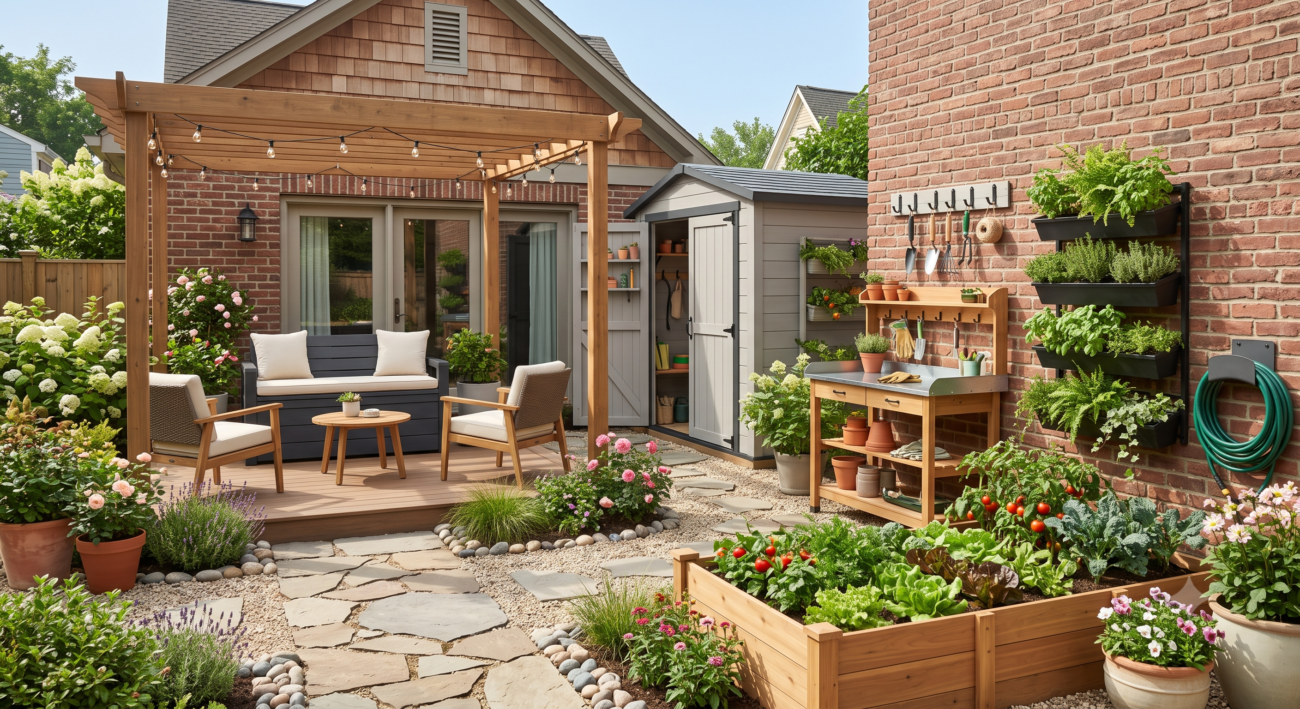
Surround the greenhouse with flowering perennials, gravel walkways, and decorative planters for a charming garden retreat.
Productive Vegetable Garden
Install several raised beds adjacent to the greenhouse so mature plants can move outdoors while new seedlings continue growing inside.
Organized Gardening Station
Add shelving, a potting bench, storage bins, and hooks inside the greenhouse to keep tools and supplies neatly organized.
Setting Up Your Greenhouse
Choosing the right location is essential.
Place your greenhouse where it will receive six to eight hours of sunlight each day while remaining protected from strong winds whenever possible.
Inside the greenhouse, consider adding:
- Adjustable shelving
- Potting bench
- Watering can storage
- Thermometer
- Ventilation fan
- Hanging baskets
Good airflow helps reduce excess humidity while creating healthier growing conditions.
💡 EverPlay Tip
Install a simple thermometer inside your greenhouse. Monitoring temperature daily helps prevent plants from overheating during sunny afternoons.
Caring for Your Plants
A greenhouse provides ideal growing conditions, but regular maintenance is still important.
Remember to:
- Water consistently
- Ventilate during warm days
- Remove dead leaves
- Rotate plants for even sunlight
- Inspect for pests regularly
- Fertilize according to plant needs
Healthy habits lead to healthier harvests.
🛒 Before You Buy
Before choosing a greenhouse, ask yourself:
✔ How much growing space do I need?
✔ Will the greenhouse receive enough sunlight?
✔ Do I need shelving or a potting bench?
✔ What plants do I plan to grow?
✔ Will I garden year-round or seasonally?
✔ Do I have easy access to water?
⭐ EverPlay Recommendation
For most homeowners, a walk-in polycarbonate greenhouse provides the ideal combination of durability, insulation, and growing space. Pair it with raised garden beds and a potting bench to create an efficient gardening setup that can be enjoyed throughout much of the year.
Common Mistakes to Avoid
Avoid these common greenhouse mistakes:
- Placing the greenhouse in too much shade
- Forgetting ventilation
- Overwatering plants
- Overcrowding seedlings
- Ignoring temperature changes
- Skipping routine cleaning
Small adjustments can make a significant difference in plant health.
Frequently Asked Questions
Do I need a large backyard for a greenhouse?
No. Compact greenhouses are available for smaller yards, patios, and even decks.
Can I use a greenhouse during winter?
Yes. Depending on your climate and the plants you’re growing, a greenhouse can help protect plants and extend the growing season well into colder months.
Is polycarbonate better than glass?
For most homeowners, polycarbonate offers better insulation, durability, and impact resistance while requiring less maintenance.
What vegetables grow best in a greenhouse?
Tomatoes, peppers, cucumbers, lettuce, spinach, and herbs are among the most popular greenhouse crops.
Is greenhouse gardening good for beginners?
Absolutely. A greenhouse gives beginners greater control over growing conditions, making it easier to achieve healthy, productive plants.
Final Thoughts
A greenhouse is one of the best investments you can make if you’re passionate about gardening. It extends your growing season, protects plants from unpredictable weather, and creates the perfect environment for vegetables, herbs, flowers, and seedlings to thrive.
Whether you’re growing fresh produce for your family or simply enjoying gardening as a hobby, a well-designed greenhouse helps you get more from every season while making your backyard even more enjoyable.
Related Categories
- Greenhouses
- Raised Garden Beds
- Potting Benches
- Garden Tools & Accessories
- Storage Sheds
- Deck Boxes
Related Articles
- Raised Garden Bed Gardening for Beginners: Everything You Need to Know
- How to Choose the Best Deck Box for Your Patio
- Outdoor Storage Shed Buying Guide: Resin vs. Metal vs. Wood
- Top 7 Backyard Upgrades That Add Value to Your Home
- Backyard Shade Ideas: Pergolas, Gazebos, Umbrellas & Canopies
🌿 EverPlay Inspiration
Imagine walking into your greenhouse on a cool spring morning, surrounded by rows of thriving seedlings, fragrant herbs, and vibrant flowers. While the weather outside is still unpredictable, your greenhouse is already bursting with life—giving you a head start on the season and the satisfaction of harvesting fresh, homegrown produce for months to come.